
Description of ACI courses
A brief overview of the 18 foundational courses of the Asian Classics Institute (Asian Classics Institute).

The Asian Classics Institute (ACI) was founded in 1993 by Geshe Michael Roach to share the teachings of the ancient course “Master of Buddhism” (Geshe) with men and women of the modern world.
The Institute offers, among many other materials, 18 foundational ACI courses and 18 advanced ACI courses. The purpose of this document is to provide a summary of the content and sequence of these 36 courses. The course material includes 6,800 pages of original translations of authentic, classical ancient Buddhist literature. Each page contains the full original Tibetan text to ensure complete accuracy. Most of this material has been made accessible to the modern world for the first time.
Geshe Michael underwent much of his training under the guidance of his root Tibetan Lama, Khen Rinpoche, Geshe Lobsang Tarchin (1921-2004, shown at the top left). Khen Rinpoche was a prominent master who served as the abbot of the Sera Me Monastery in Tibet, one of the largest Buddhist monasteries in the world, established in 1419.
The Geshe course requires 20 to 25 years of study in a modern Tibetan monastery. Geshe Michael received his Geshe degree at Sera Me in 1995. This course follows the tradition of Je Tsongkhapa (1357-1419), a prolific writer and organizer whose teachings on every significant aspect of Buddhism are highly accurate and, when applied in personal practice, lead to the end of suffering and the attainment of the highest happiness for oneself and all other living beings.
The Geshe course covers five main themes of Buddhism, which correspond to the four major Buddhist schools of ancient India. Each school of thought is based on the historical teachings of the Buddha and presents a path to enlightenment in slightly different ways to accommodate followers with various abilities and personalities.
Here is a brief description of the five themes, which correspond to the four classical schools:
1) Higher Knowledge (Abhidharma)
Description of ACI Courses
The study of “Higher Knowledge” is a collection of major ideas compiled by generations who directly followed the Buddha, which he taught during the 50 years of his teachings in this world.
We can view these teachings as the foundational basis of all Buddhism. Therefore, the school of “Higher Knowledge” represents the first major period among the four classical schools of Buddhist history following the Buddha.
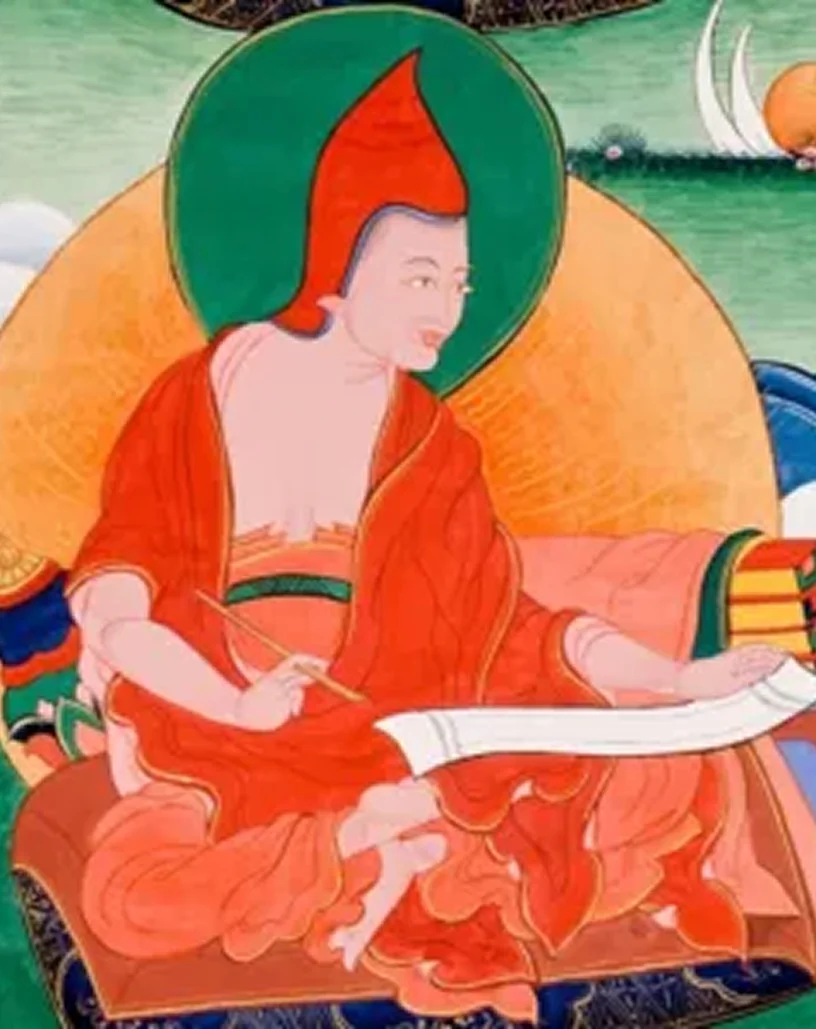
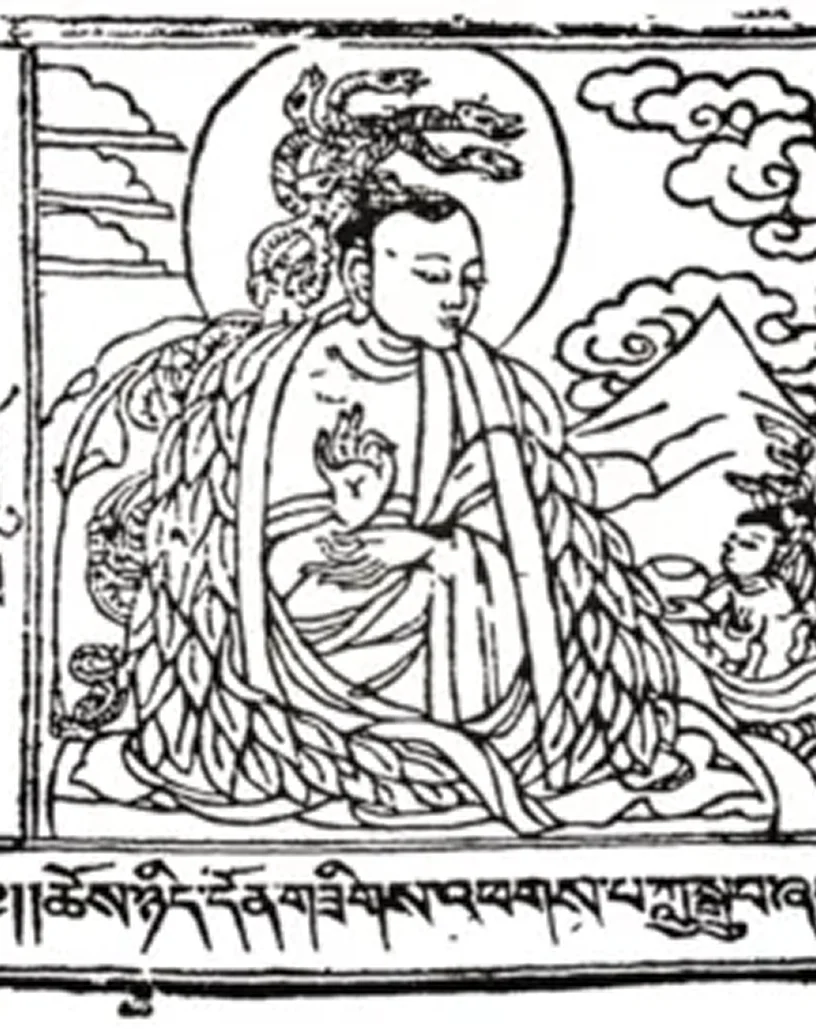
In the Geshe course, each of the five main schools is studied through a primary text, which is often memorized. In “Higher Knowledge,” we study the *Abhidharma Koshakara*, authored by the master Vasubandhu (shown in the image above) around 350 AD. Each of these classical works is studied alongside detailed monastic textbooks, which serve as examples of crucial Buddhist classics, dating back approximately 500 years.
2) Vows of Moral Discipline (Vinaya)
One of the cornerstones of Buddhism is the commitment not to harm other living beings. The study of formal ethical commitments is the second major theme in historical Buddhism and can be seen as a branch of the “Higher Knowledge” school of Ancient India.
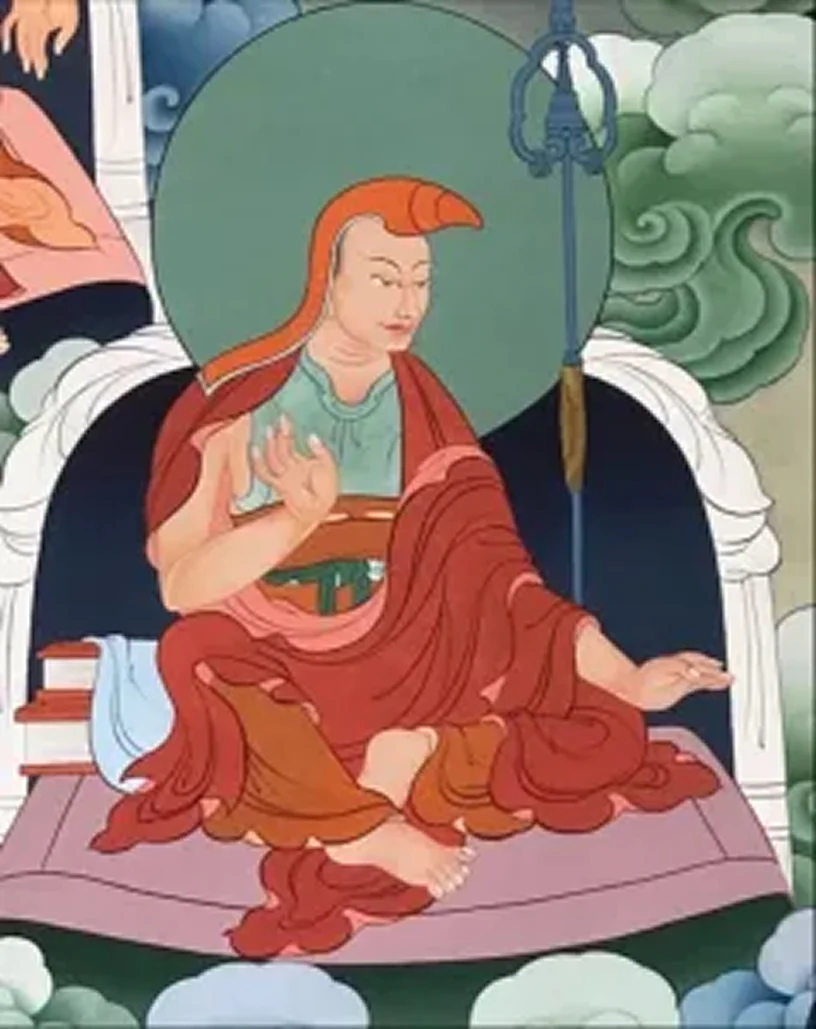
In the Geshe course, morality based on vows is studied through the *Short Book on Vows of Moral Discipline*, written by Master Gunaprabha (shown on the left) around 550 AD.
3) Clear Thinking (Pramana)
When we look at a box with four wheels, how do we come to recognize it as a car? How can clear thinking, also known as “logic,” act like a “third eye,” enabling us to grasp profound ideas — things we could never perceive with our eyes and ears alone? These questions are addressed in the third major theme of Buddhism: clear thinking, also referred to as “precise” or “accurate perception.”
This theme is connected to the *Sutrayana* school, the second of the four major schools of Ancient India. This school earned its name because they believed that direct study of the original sutras or teachings of the Buddha was superior to studying the commentaries produced by the school of *Higher Knowledge* created by ordinary humans.
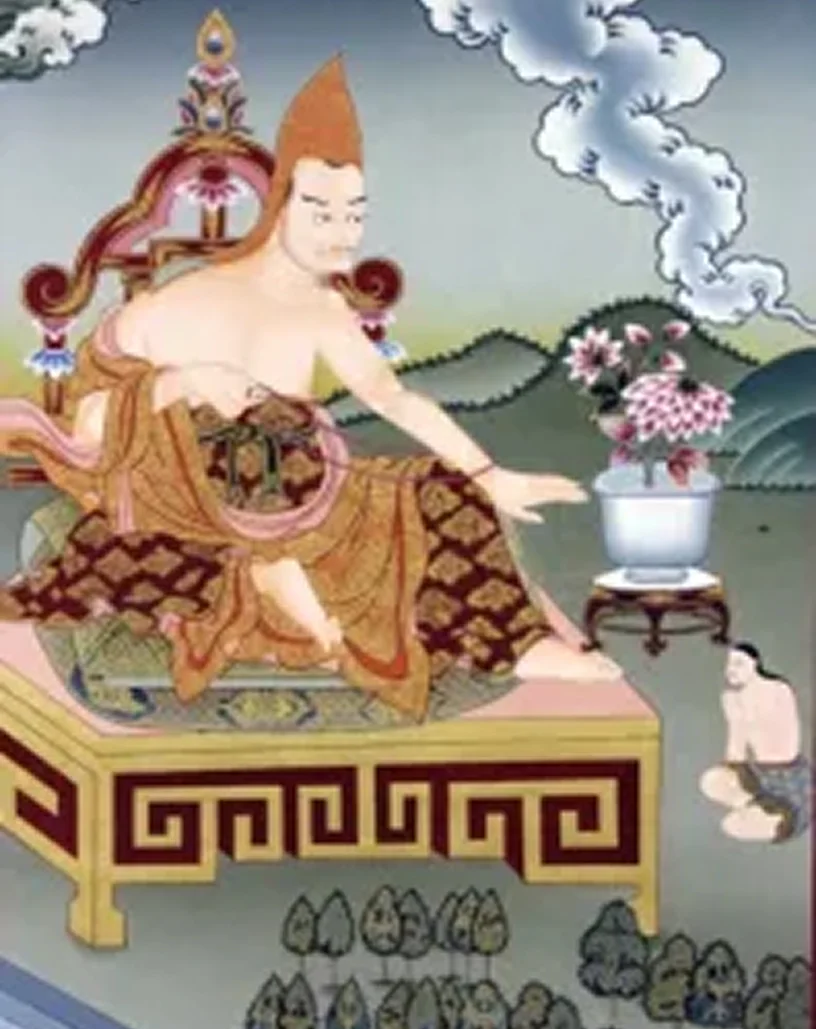
The topic of clear thinking is explored in the Geshe course through the study of the *Commentary on Accurate Perception*, written by Master Dharmakirti (shown in the image during a debate) around 650 AD.
4) The Perfection of Wisdom (Prajnaparamita)
The phrase “the Perfection of Wisdom” refers to the vast collections of authentic teachings of the Buddha. In the context of the five classical themes, it specifically pertains to the lower half of the Middle Way school, which is, in turn, the highest of the four ancient schools. This lower half is known as the Independent group, based on the belief in the autonomous power of logic and words.
The monastic course on this subject can be seen as a comprehensive overview of nearly all the major topics of Mahayana Buddhism: the Great Path — the path of the Bodhisattva, which promises enlightenment to benefit all living beings. This course is centered around three significant states of awareness: the perception of the absence of inherent existence by practitioners of the lower path; the perception of true emptiness by the Bodhisattva; and the omniscience of the enlightened being.
This fourth theme is illuminated through the study of the Jewel of Awareness, dictated to Master Asanga (shown in the image above, around 350 AD) by the Buddha Maitreya, the future Buddha. As with other topics, but especially in this case, the course includes an extensive number of commentaries from the greatest Tibetan classics.
In addition to these texts, there is a monastic tradition of extracting key themes from the Jewel of Awareness and generating entire genres of literature based on these teachings.
In fact, the first practical application of the Asian Classics Preservation Project (ACIP) database was the printing of books for use in modern monasteries, containing collections of these distilled texts, which made them accessible for the first time. Entire books are dedicated to subjects like the twelve links of dependent origination and the third of the four major schools — the Mind-Only school.
5) The Middle Way (Madhyamika)
The fifth and final major theme is called “The Middle Way”, which in the Geshe training curriculum belongs to the higher part of the higher school among the four ancient schools known as the “Middle Way” school. This higher half – the “group of Consequences” – is named as such because it emphasizes the unique power of pointing out the absurd consequences of people’s false ideas.
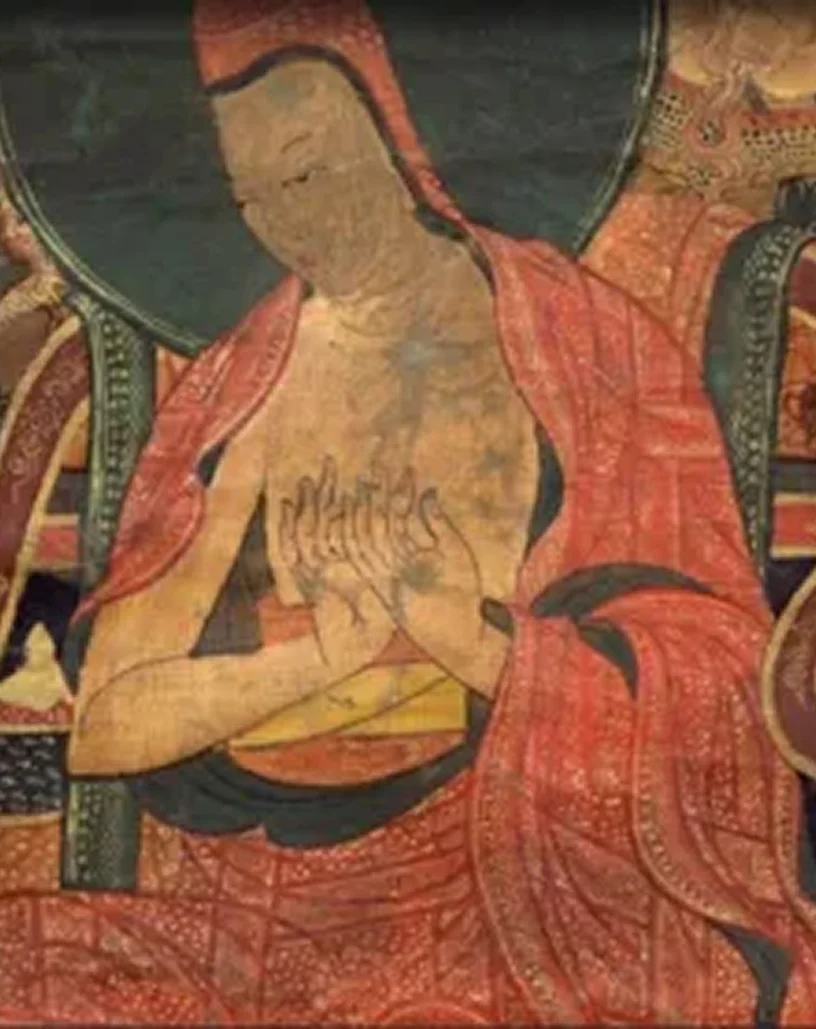
This theme is explored through the book “Entering the Middle Way”, a profound explanation of the unparalleled thinking of Arya Nagarjuna (circa 200 CE, see the image above). The author of this book is Master Chandrakirti (see the subsequent image), who lived around 650 CE.
The structure of this book follows the ten stages of a Bodhisattva’s path, which are built upon the six “perfections” – the typical activities of a Bodhisattva. The sixth Bodhisattva stage focuses on the “Perfection of Wisdom”, and consequently, on directly perceiving “emptiness” – a significant portion of the book’s content.
Therefore, “The Middle Way” in the Geshe curriculum centers on advanced teachings about “emptiness”, specifically on how to see it directly. Since the understanding of *emptiness* held by this higher half of the “Middle Way” school is completely accurate, other known traditions of teachings and practices were built upon it.
The most important of these teachings is the “Diamond Path” tradition – advanced methods and practices designed to bring someone to enlightenment within a single lifetime, far faster than the millennia required in other paths.
The “Lamrim tradition”, or *the stages of the path*, is also based on the teachings of the higher part of the “Middle Way” school. The Lamrim tradition presents the five major themes in a condensed and simplified manner, catering to individuals who do not have the time or interest to study all five major themes in detail.
Another significant tradition based on this final theme is known as the “Art of Interpretation”, often associated with the tradition of “the examination of philosophical schools.Together, these traditions involve the interpretation of all major schools of thought in ancient India – both “Buddhist” and “non-Buddhist”, particularly focusing on contemporary questions about understanding “emptiness”.
The deep details of the important “Mind Only” school are studied by Geshe candidates in the context of this “Art of Interpretation.”
When divided into “tracks”, the first two ancient schools (the “Higher Knowledge” and “the Sutrists”) are grouped under the “Lower Path”, where followers currently do not have the Bodhisattva motivation to achieve enlightenment solely to benefit all living beings. The third and fourth schools (“Mind Only” and “The Middle Way”) are grouped under the “Higher Path”(“Mahayana” in Sanskrit). The difference between these two paths lies in the deeper accuracy with which they explain the concept of “emptiness”.
Here is a brief outline of the order and duration of Geshe studies on the five main topics in a typical Tibetan monastery of the Tsongkhapa lineage (it may vary slightly in different monasteries).
| Years 1-12 | Perfection of Wisdom |
| Years 13-16 | The Middle Way |
| Years 17-18 | Morality Based on Vows |
| Years 19-20 | Highest Knowledge |
| Years 21-25 | Additional studies, such as the Art of Interpretation, are undertaken depending on the Geshe exam schedule |
Now that we have some basic understanding of the Five Major Topics, let's look at how the ACI 18 Basic Courses study plan addresses these topics.
- ACI Basic Course 1: “The Fundamental Teachings of Buddhism”
- ACI Basic Course 2: Buddhist Refuge
- ACI Basic Course 3: Applied Meditation
- ACI Basic Course 4: The Proof of Future Lives
- ACI Basic Course 5: How Karma Works
- ACI Basic Course 6: The Diamond Cutter Sutra
- ACI Basic Course 7: Bodhisattva Vows
- ACI Basic Course 8: Death and Realms of Existence
- ACI Basic Course 9: Ethical Living
- ACI Basic Course 10: The Bodhisattva's Way of Life, Part 1
- ACI Basic Course 11: The Bodhisattva’s Way of Life, Part 2
- ACI Basic Course 12: The Bodhisattva’s Way of Life, Part 3
- ACI Basic Course 13: The Art of Reasoning
- Basic Course ACI 14: “Lojong: Cultivating a Good Heart”
- Foundational Course ACI 15: “What Buddha Really Meant”
- Foundational Course ACI 16
- Foundational Course ACI 17
- Foundational Course ACI 18
ACI Basic Course 1: “The Fundamental Teachings of Buddhism”
ACI Course 1 is a thorough examination of the three great realizations (often referred to as the “three main paths”) that are essential for every Buddhist practitioner. That is why it is the first of these 36 courses. Here are the three realizations:
- Renunciation or concern about the suffering of the world;
- The wish for enlightenment or the desire to become a Buddha oneself in order to help every living being in the universe; and
- Correct understanding of the world, or the realization that there is no person and no object that did not originate from seeds in my own mind.
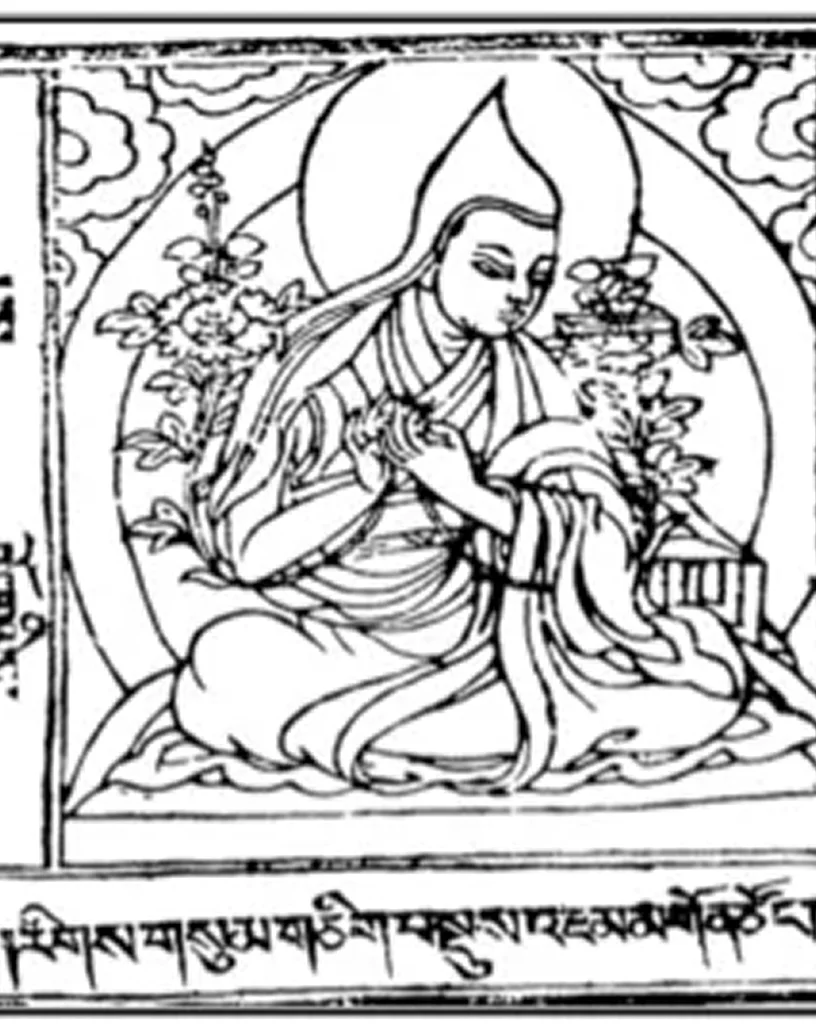
This course is based on the fifth topic, “The Middle Way.” It is grounded in the very famous poem by Je Tsongkhapa (see image), titled *”The Three Main Paths.”* The course also includes the full text of the commentary on this poem, composed by Pabongka Rinpoche (1878-1941), the most renowned Tibetan lama of the early 20th century, and the root teacher of Trijang Rinpoche (1901-1981), who was the root teacher of Khen Rinpoche.
ACI Basic Course 2: Buddhist Refuge
Taking refuge in the Buddha is considered the single act that makes someone a Buddhist. Therefore, the next ACI course explores how we do this: how we seek protection from the suffering of life in our own hearts. In connection with this, we also study other important Buddhist concepts related to refuge: the aspiration for enlightenment, bodhisattva, nirvana, emptiness, and enlightenment itself.
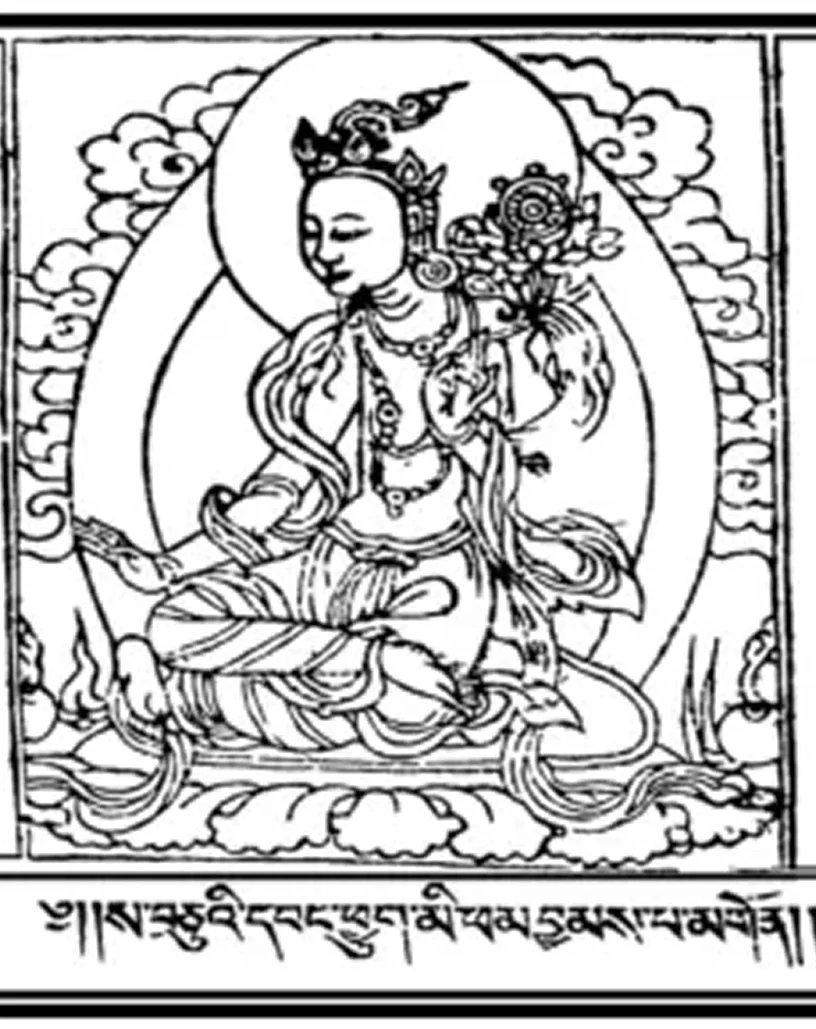
This course is based on the fourth topic, Perfection of Wisdom, and includes readings from the commentary The Precious Garland of Awareness, composed by the future Buddha, Maitreya, along with Arya Asanga (circa 350 CE). These commentaries were written by Khedrup Tenpa Darjie (1493-1568), a respected author of textbooks for the Geshe curriculum in the Sera Monastery in Tibet.
ACI Basic Course 3: Applied Meditation
Good meditation is the foundation of all Buddhist practice, and therefore, the next ACI course examines meditation in the tradition of Tsongkhapa. This is a precise and effective science in an unbroken line of transmission spanning many centuries, in contrast to the many baseless meditation trends that arise and disappear in the world today.
In this course, we immerse ourselves in this science and lineage to establish a strong foundation for our personal meditation practice, which we can apply throughout our lives, both at home and in our professional careers.
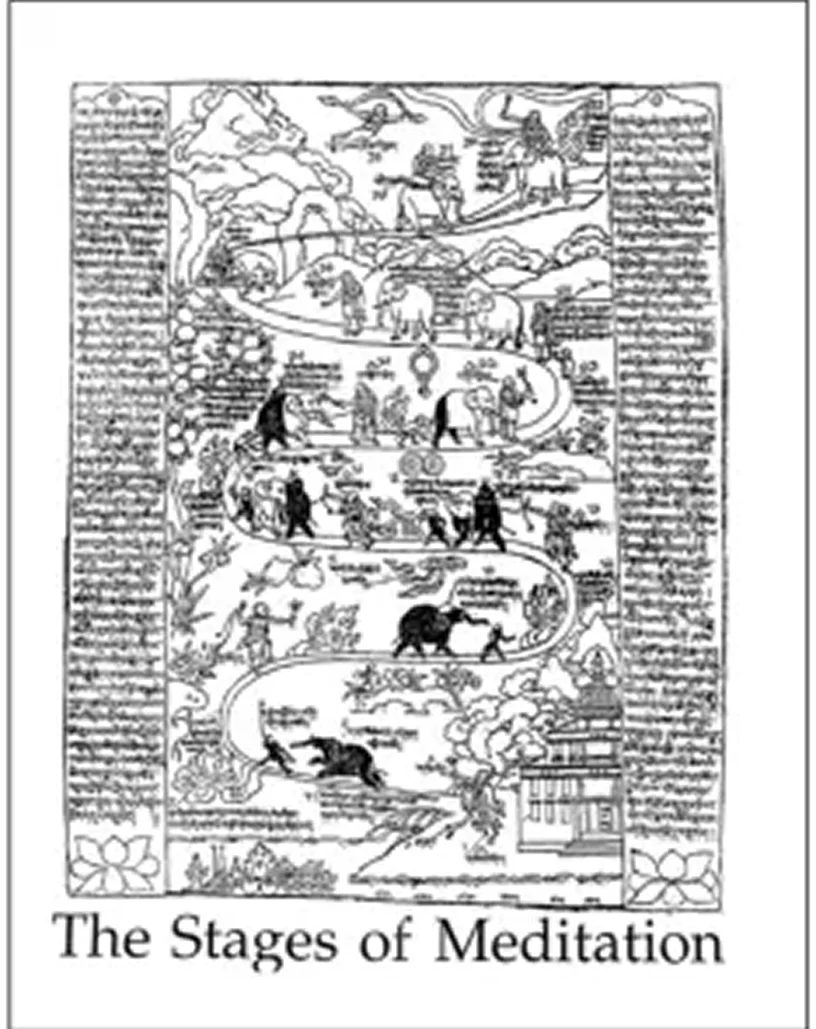
The central part of this course is a special wooden print titled The Stages of Meditation (see the image below). This poster outlines the entire meditation course and was developed by Kyabje Trijang Rinpoche, based on the teachings of the Indian master Kamalashila (circa 775 CE). Kamalashila’s Stages of Meditation, composed of three parts, form the foundation of all later meditation schools in Tibet.
This course further relies heavily on the detailed explanation of this system presented by Je Tsongkhapa in his primary works on the stages of the path.
A robust meditation practice underlies each of the five major topics of Buddhism, particularly the Middle Way, which states that enlightenment is only possible through a combination of deep meditation (shamata in Sanskrit) and profound insight into emptiness (vipashyana).
ACI Basic Course 4: The Proof of Future Lives
Successful Buddhist practice depends on genuine compassion, which in turn relies on the correct perception of the immense amount of suffering in the world—a suffering that continues beyond this current life we are living. Therefore, the topic of the next ACI course is the proof of future lives.
Very few people in the modern world believe that they have come into this life from a previous life, or that they will transition from this life to the next, across an endless cycle of time. Since the purpose of Buddhism is to eliminate suffering and bring about happiness across all these countless lives, it would be beneficial to first establish the proof that such lives actually exist. This is what the fourth ACI course is committed to doing.
Taking refuge in the Buddha is considered the single act that makes a person a Buddhist. Therefore, the next ACI course explores how we do this: how we seek protection from the sufferings of life within our hearts. In this context, we also study other important Buddhist ideas related to refuge: the desire for enlightenment, bodhisattva, nirvana, emptiness, and enlightenment itself.
This course is based on the fourth theme, the Perfection of Wisdom, and includes readings from the commentary The Precious Garland of Insights, composed by the future Buddha, Maitreya, along with Arya Asanga (circa 350 CE). These commentaries were written by Kedrup Tenpa Dargye (1493-1568), a respected author of the textbooks for the Geshe curriculum in the Sera Monastery of Tibet.
For this course, we use the third major theme — “Clear Perception” — since one of the initial goals of this theme is to prove the existence of our past and future lives. We also delve into some related supplementary topics, such as the levels of reality, the definition of valid perception, evidence of omniscience, and the connection between karma and rebirth.
In Course 4 of ACI, we rely heavily on the foundational text Commentary on Valid Perception by Master Dharmakirti, as well as The Precious Garland of True Insight, an extraordinary commentary on this complex work, composed by a contemporary Tibetan scholar, Geshe Yeshe Wangchuk (1928-1999). He was the root lama of one of the important teachers of Geshe Michael in the monastery, Geshe Thubten Rinchen, and contributed to editing the work alongside Geshe Michael and Geshe Wangchuk.
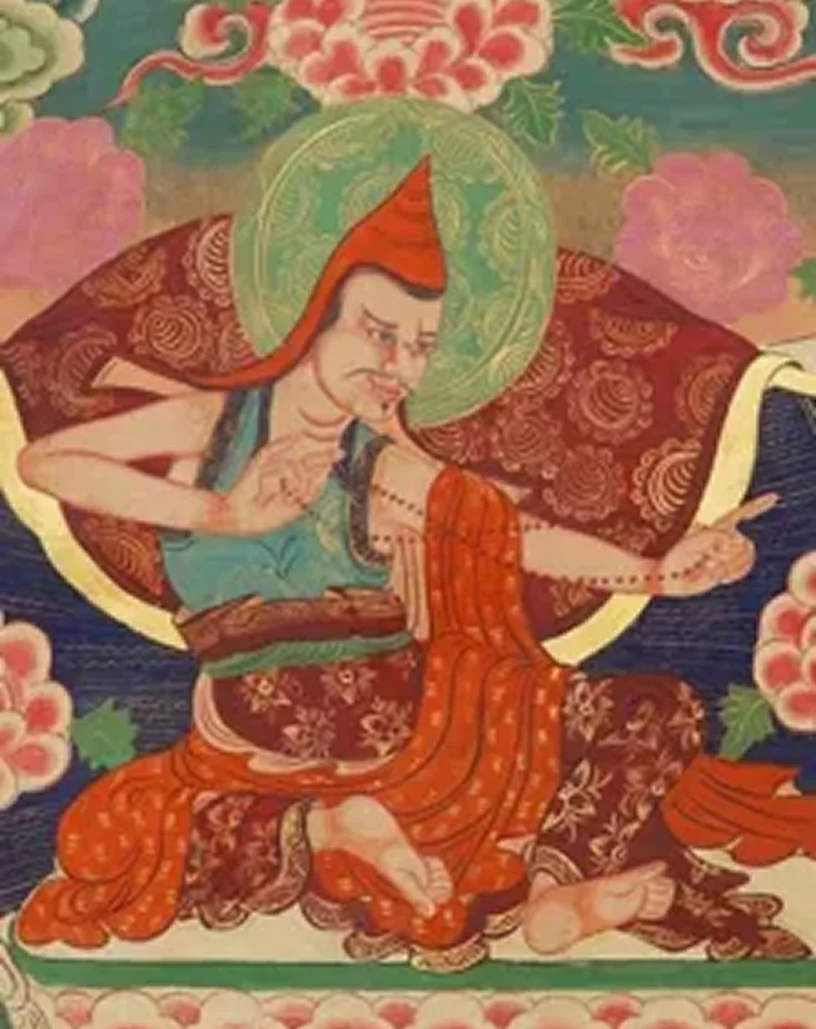
Additionally, we briefly explore the work of Master Dignaga (circa 550 CE, see image), who followed Master Dharmakirti and made significant contributions to this lineage of thought.
ACI Basic Course 5: How Karma Works
If karma created our world and ourselves, we must understand exactly how it works if we want to change this world and ourselves. This is the subject of the next ACI course. It is equally important whether we grew up in a culture that never believed in karma, or in a culture that believed in it, but possibly in a flawed way. ACI Course 5 serves as an excellent summary of classical teachings on every major aspect of how karma functions.
The traditional primary source for karmic teachings is the Treasury of Higher Knowledge by Master Vasubandhu, belonging to the first major theme and the first of the four major schools.
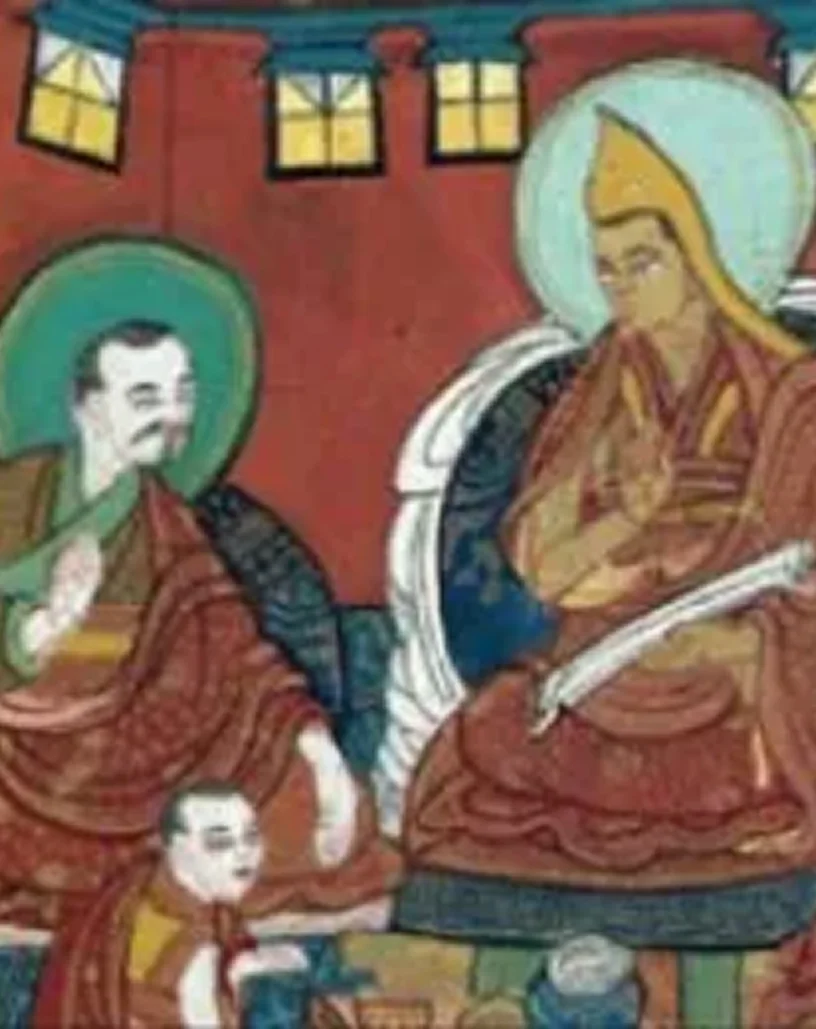
In this course, we explore this treasure through The Light on the Path to Freedom by Gyalwa Gendun Drup (1391-1474) — an important introductory commentary on Master Vasubandhu’s work. This master was a direct student of Je Tsongkhapa, and we see them here in a traditional depiction of their first meeting. In Course 5, we also gain insights into how karma and emptiness work together, using selected passages from the literature of the Middle Way.
ACI Basic Course 6: The Diamond Cutter Sutra
Before we delve deeper into the 36 ACI courses, it is crucial to gain a strong initial understanding of emptiness, as presented in its highest and most precise form in the fifth major theme of the Middle Way. According to the Buddha, understanding emptiness is the only way we can help ourselves and every other living being escape suffering.
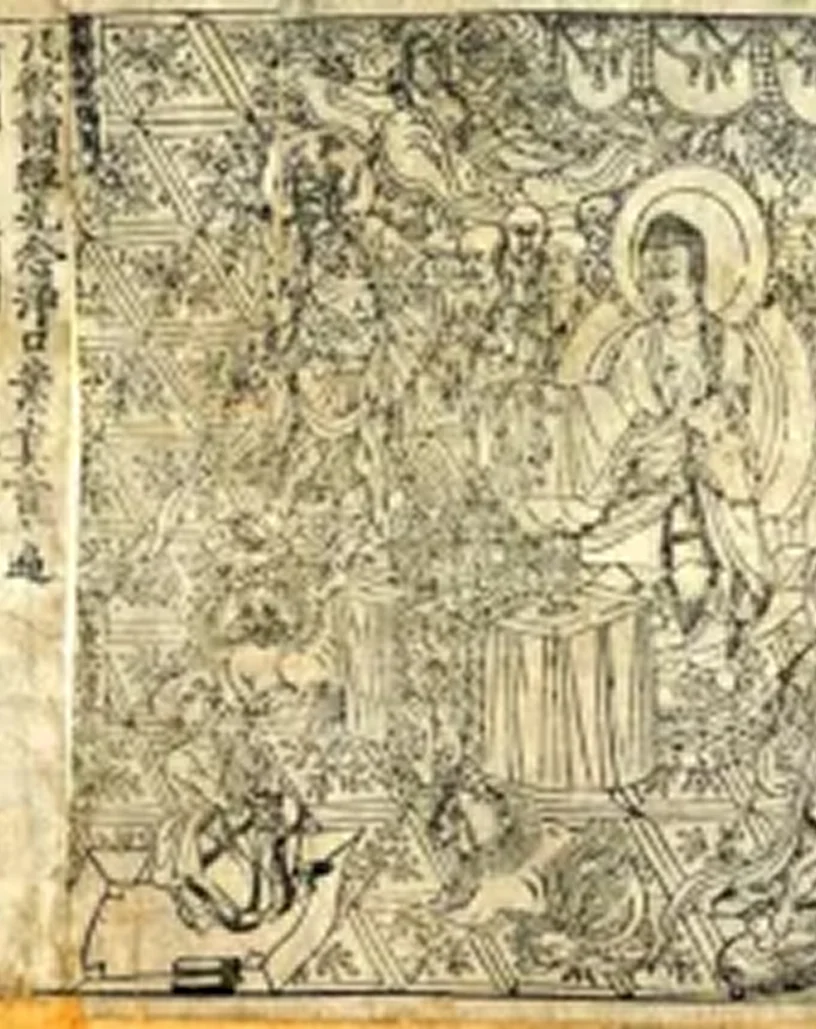
While in the Western world, we might usually think of the Bible as the most influential printed book of all time, this honor might actually belong to the Diamond Cutter Sutra — here we see a Chinese version from a wooden print, which is the oldest printed book in the world, with a release date of around 868 CE.
As always, the sutra is essentially a conversation between the Buddha and one of his disciples, who poses a question that initiates the entire teaching. Only one major commentary on the Diamond Cutter Sutra survived in ancient India. Additionally, a second highly significant Tibetan commentary was restored through the Asian Classics Preservation Project (ACIP), founded by Geshe Michael at Princeton University in 1987. This project restored, digitized, and made millions of pages of ancient Buddhist texts freely accessible online.
This Tibetan commentary is known as The Sunlight on the Path to Freedom, written by Drakpa Shedrup (commonly referred to as Choni Lama, shown here in a traditional wooden print). He lived between 1675-1748 and was a crucial author of textbooks for the Geshe course at the Sera Me Monastery, contributing over 250 precise and insightful explanations of the greatest Buddhist teachings.
Course 6 offers the essence of brilliant ideas from his commentary on the Diamond Cutter Sutra — a complete beginner’s guide to understanding emptiness.
The Sutra and the commentary by Choni Lama provided the foundation for Geshe Michael’s popular book on business and personal success, The Diamond Cutter: The Buddha on Managing Your Business and Your Life. Approximately a million copies of this book have been sold and it has been translated into over 30 languages worldwide.
In turn, this became the basis for the Diamond Cutter Institute, which now trains about 30,000 people a year in approximately 20 countries, teaching the principles of success.
ACI Basic Course 7: Bodhisattva Vows
If the understanding of emptiness is the vehicle that brings us to enlightenment, then the desire to help all living beings in this universe is like the fuel for that vehicle. Therefore, the next ACI course is a detailed presentation of the traditional 64 commitments that we take on and maintain to transform ourselves into an active bodhisattva.
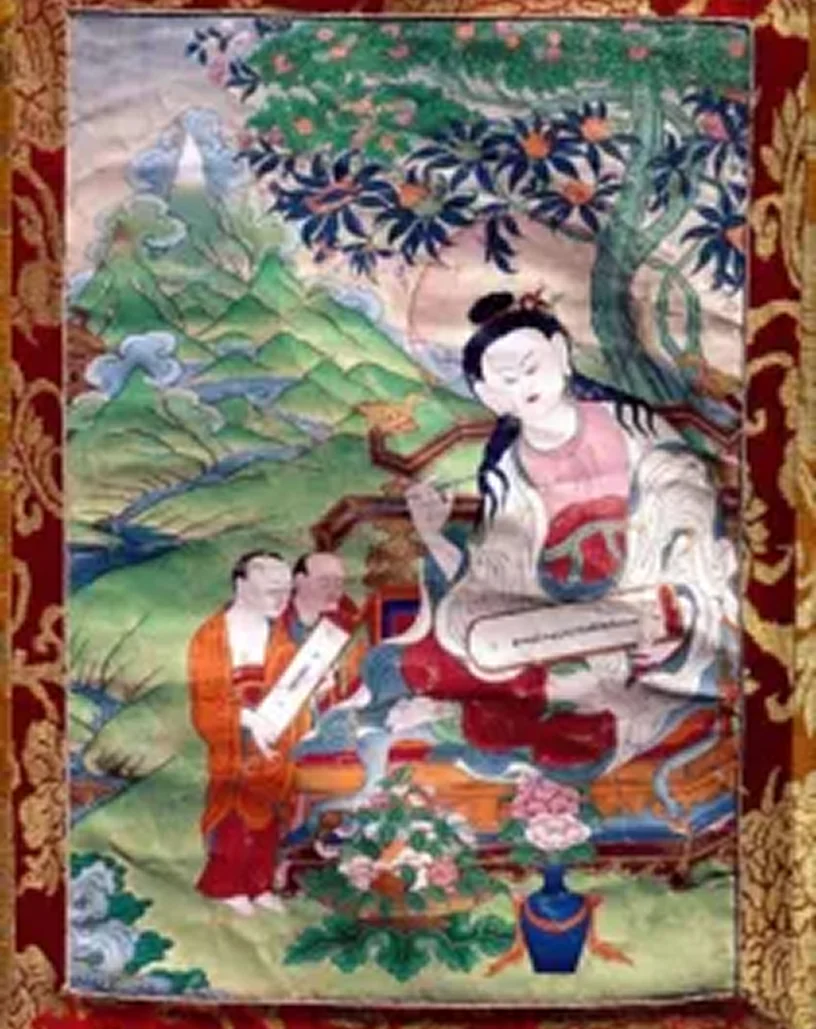
We study the details of the vows and the ancient sources from which they originated. They include the Buddha himself; Master Chandrakirti (see the image below); Arya Asanga; and Master Shantideva.
The description of the vows is based on two important commentaries. The first is The Path of a Bodhisattva, an extended, precise explanation of the vows and their sources by Je Tsongkapa. The second commentary is The Chain of Radiant Jewels — an incredible text that succinctly summarizes each commitment from the three sets of vows — the personal liberation vows, the bodhisattva vows, and the secret vows — in a clear but concise way. This work was also restored by the ACIP and was composed by Geshe Tewang Samdrup in the Tibetan monastery of Drepung in the 1800s.
The bodhisattva vows particularly relate to the fifth and highest of the five topics — the Middle Way.
ACI Basic Course 8: Death and Realms of Existence
The possibility of future lives opens up the question of which realms exist in the universe where we might end up after death. Then comes the entire process of death itself: what actually happens to us? There seems to be some “heavy” information about this, and perhaps much misinformation as well.
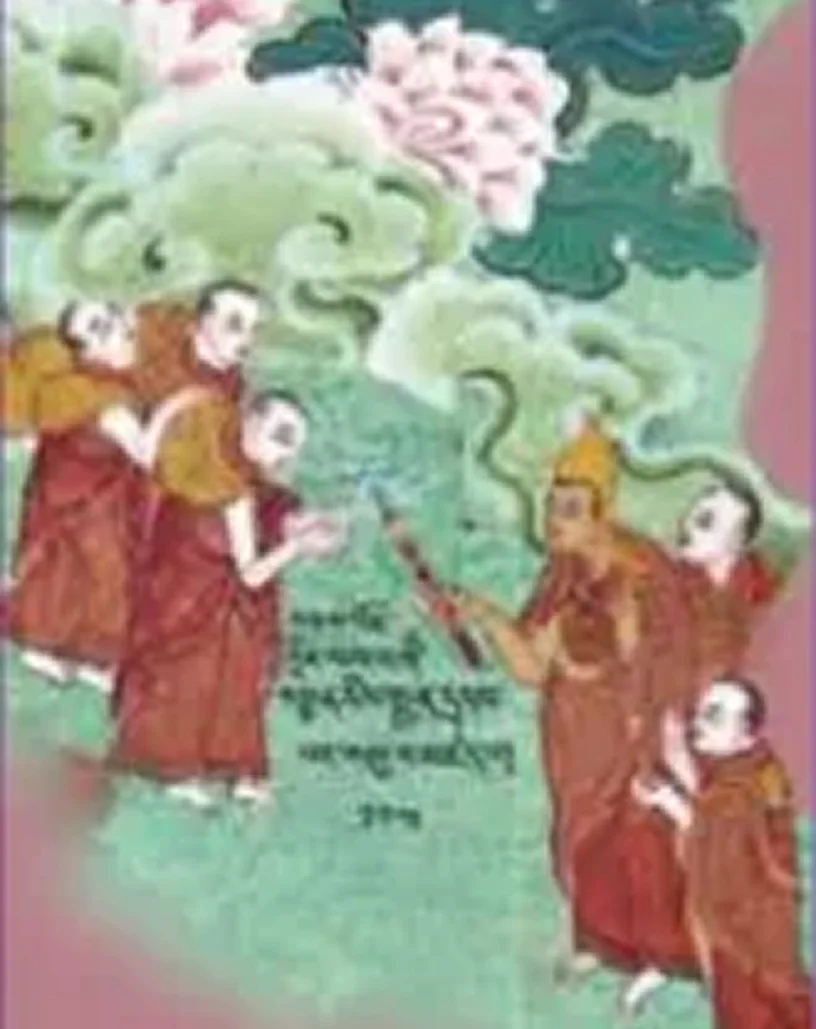
We include here a very important early 12th-century work called The Great Book of Steps of Teaching. This massive text, composed by Geshe Drolungpa and Lodru Jungne, was restored and printed by the ACIP and is the oldest significant work from the Kadampa era of early Tibetan Buddhism. Interestingly, the manuscript was lost during Tsongkhapa’s time, and he rediscovered it as well! A traditional image shows this joyful scene. In this eighth basic ACI course, we dive directly into authentic ancient sources to answer these questions. We rely heavily on the first topic, the teachings on Higher Knowledge, once again using the original text of Master Vasubandhu and the commentary of Tsongkhapa’s celebrated student — Gyalwa Gendun Drupa.
ACI Basic Course 9: Ethical Living
The foundation of all karma and the rocket booster that propels us into our next life consists of the seeds we plant through our good or unkind attitudes toward those around us every day. The Buddha spent much of his life explaining which of these seeds are the most important, the most powerful — and therefore, it is crucial for us to study these details.
The ninth basic ACI course is dedicated entirely to the second of the five great themes: morality based on vows. We present the entire structure of Buddhist views on ethical living, known as the Individual Freedom Vows, because those who follow these vows achieve Nirvana, whereas those who do not, do not attain it.
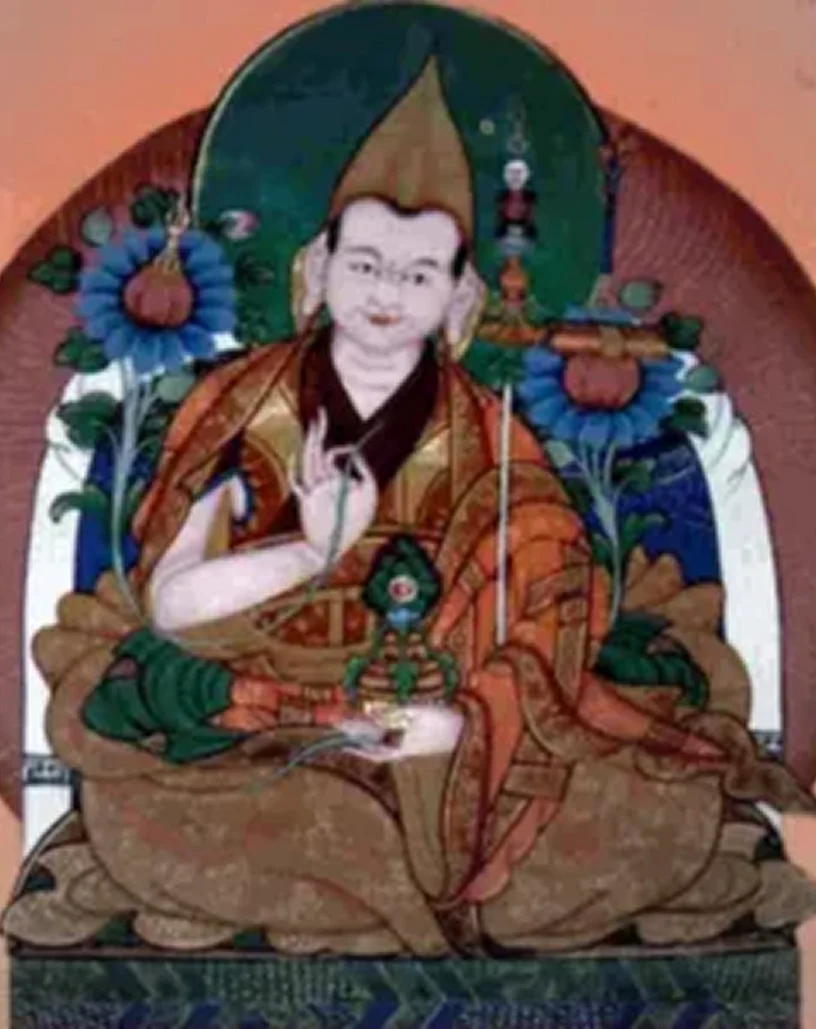
This presentation is based on the widely known verse by Tsongkhapa titled The Essence of the Ocean, along with a superb commentary by Master Quicksilver, Ngulchu Dharma Bhadra (1772-1851, see image).
Master Quicksilver plays a key role in our Diamond Path lineage and will frequently appear in the 18 advanced ACI courses. The fact that he also contributed important works on Buddhist morality further emphasizes how crucial ethical living is for those who aspire to achieve enlightenment within one lifetime, using the Diamond Path.
Tsongkhapa also wrote a legendary message revealing the connection between living an ethical life and success in meditation, and this is an important part of this course. The message was actually written for his close student, Tsako Wunpo, Ngawang Drakpa — for whom the Master also composed The Three Principal Paths, the subject of ACI Basic Course 1.
ACI Basic Course 10: The Bodhisattva's Way of Life, Part 1
A Geshe course is not all about studying, memorizing, and debating. An important part of every Geshe candidate’s life is the education they receive, often through important texts that go beyond the Geshe course and focus on the greatest masters of their time. These masters are invited several times a year to visit each major monastery and conduct such teachings in the form of a series of lectures that can last an entire day, a week, or even a month.
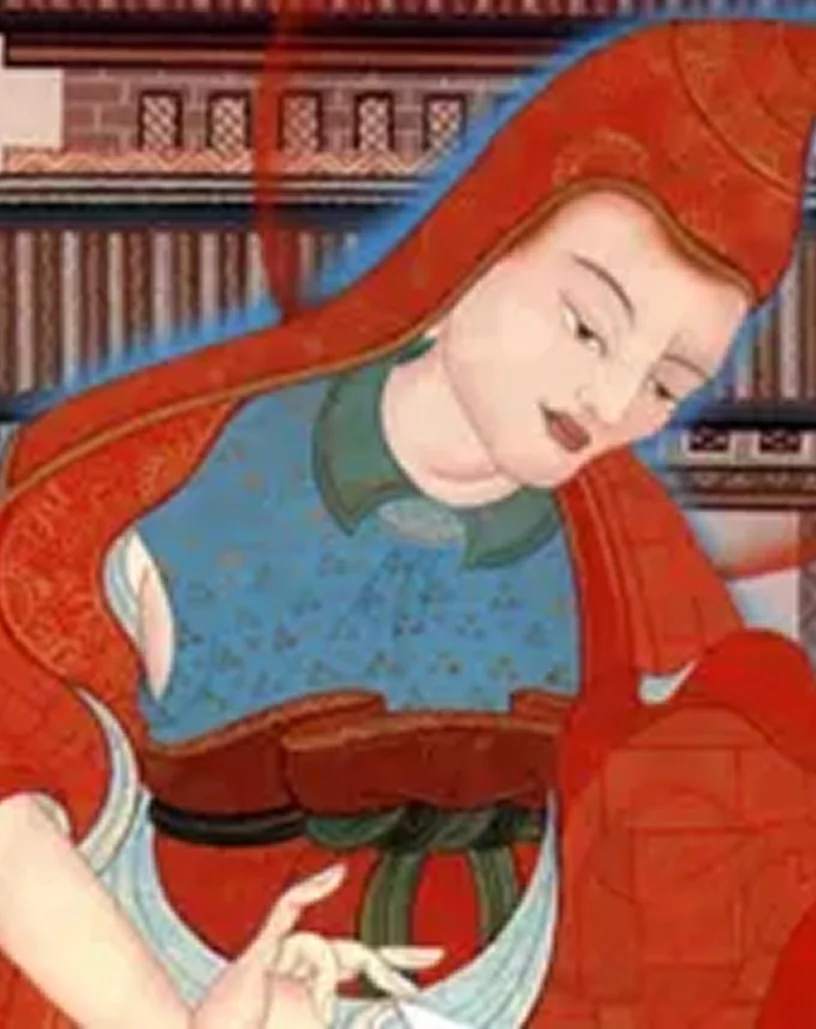
These additional teachings connect all five themes of the historical tradition to the living, personal practice of these young students. A typical series of teachings would be dedicated to The Bodhisattva’s Way of Life, composed by the supreme bodhisattva, Master Shantideva (700 CE, see image above).
This text, from the most significant classical source of the Middle Way (the fifth major theme), first reveals details about cultivating the Desire for Enlightenment, methods for accumulating strong seeds to practice this path, and then the six perfections or actions that every bodhisattva must master.
Master Shantideva’s presentation of these six perfections is considered perhaps the best of all time. Their inclusion in no fewer than three of the 18 basic ACI courses is designed to catapult us from the theory of the Geshe course into a profound personal practice of these ideas.
Here, in the tenth course, we focus specifically on the Desire for Enlightenment (bodhicitta in Sanskrit), the preparatory steps for practice, and the first two perfections: Generosity and Ethical Living, in the context of a bodhisattva’s practice of emptiness and compassion.
ACI Basic Course 11: The Bodhisattva’s Way of Life, Part 2
In this course, we continue with Master Shantideva’s brief but profound teachings on the six actions of a bodhisattva, focusing on the next three perfections: Patience, Joyful Effort, and Meditation. Master Shantideva’s insights here are among the most astonishing of all 25 centuries of Buddhism in this world.
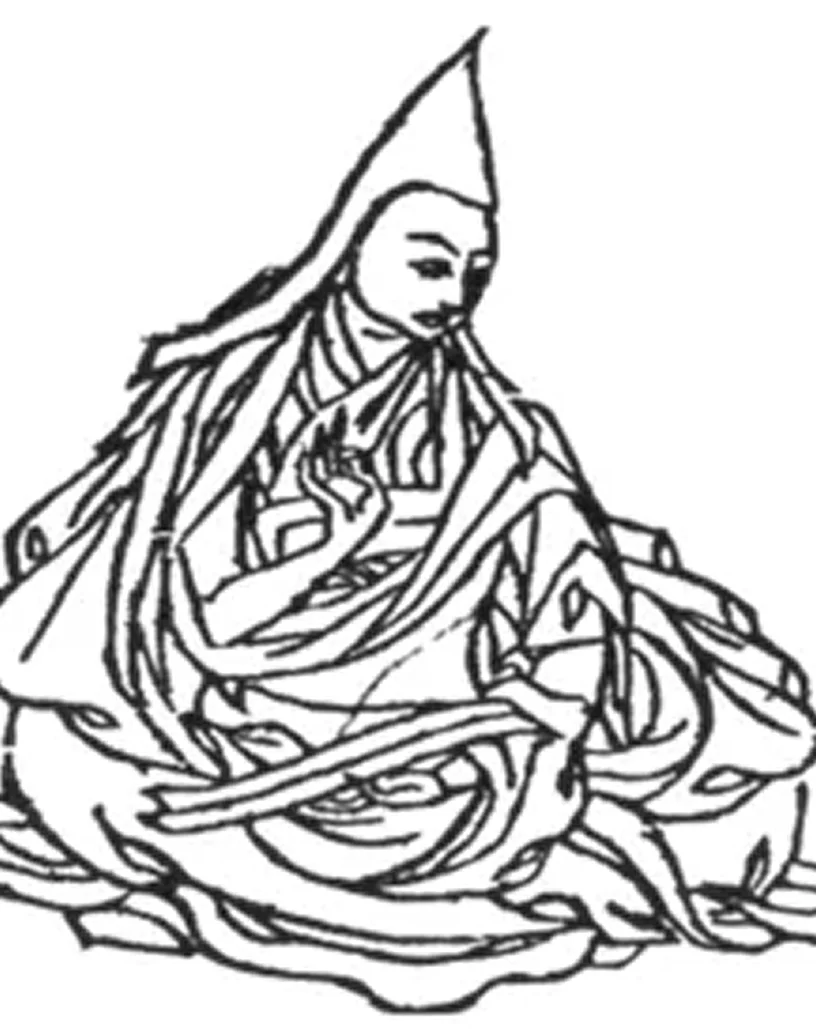
In addition to the original verses of his guide for bodhisattvas, each of these three courses on Shantideva’s teachings includes a corresponding commentary by Gyaltsab Je, Dharma Rinchen (1364-1432, see image).
Gyaltsab Je was already a renowned Buddhist philosopher before becoming a student of Je Tsongkapa. He then fully dedicated himself to the Master and became the first holder of his throne and guardian of his teachings — a position known as Ganden Tripa, which continues to this day. His prose commentary frames Shantideva’s verses like a golden setting for a beautiful diamond.
ACI Basic Course 12: The Bodhisattva’s Way of Life, Part 3
The third course of Master Shantideva’s Guide is almost entirely dedicated to the sixth and greatest of the perfections of the Middle Way: the Perfection of Wisdom, which perceives emptiness. The verses found here are considered some of the greatest teachings on emptiness of all time, addressing many conflicting questions about this absolute reality that have been raised over thousands of years.
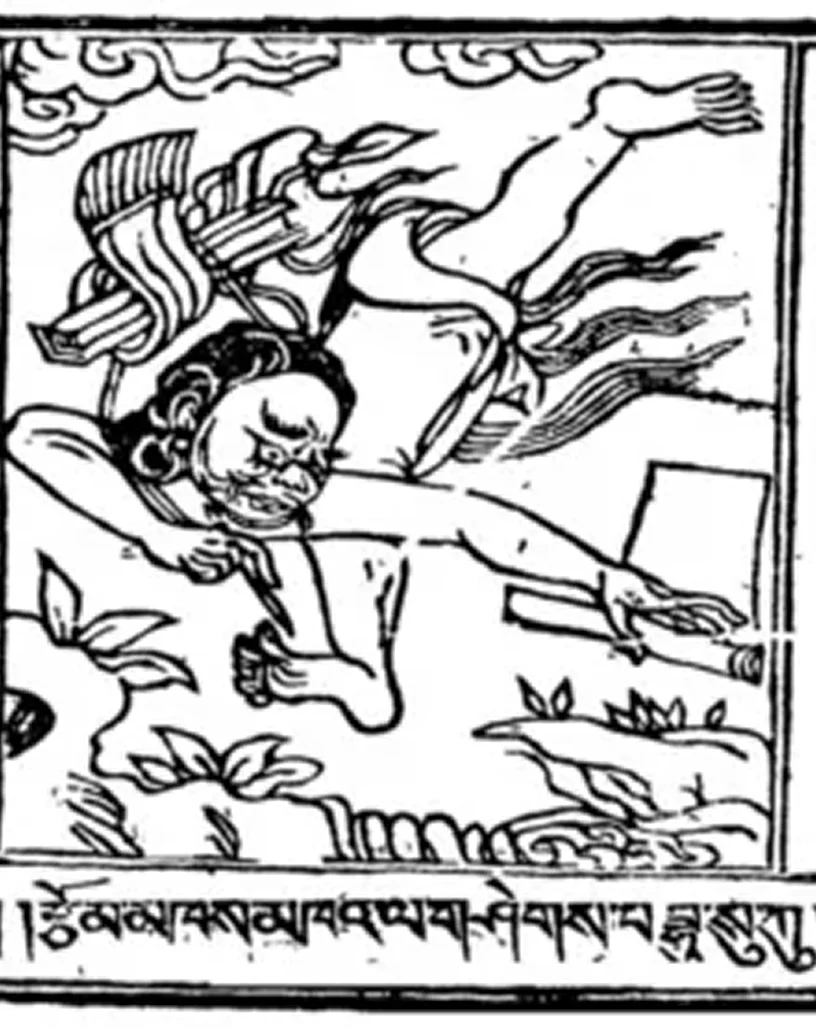
Tradition says that when Shantideva revealed these concluding lines in his original teachings, many of the concepts he presented about emptiness literally could not fit in the heads of his listeners — many of them were monks who had previously dismissed him, calling him bhusuku or lazy. At this moment, Shantideva rose into the sky with an angry expression (as shown in the traditional engraving); it became necessary to send groups of monks everywhere to locate him and the rest of his text!
The final session of the course includes an excerpt from Shantideva’s well-known “Head of Dedication”, where he dedicates the merit of his work to the well-being of every living being in the universe that experiences any form of suffering, right at that moment — starting from beings in hell realms, women in childbirth, birds flying across the empty sky.
ACI Basic Course 13: The Art of Reasoning
A carpenter who wants to build a house needs tools according to his craft: a hammer, a saw, and a square. Anyone who wishes to attain enlightenment must learn how to see things that cannot be perceived by the eyes, or even by ordinary states of mind. Therefore, we study meditation, and we study the art of reasoning: the core of the third major topic, clear thinking.
This is also why students pursuing the geshe degree in the Tsongkhapa tradition spend three months each year honing their logic and debate skills, often during the monastic Olympic games known as the “Winter Debates”. Teams from the best monks in each monastery gather on the debate grounds all day, often continuing late into the night.
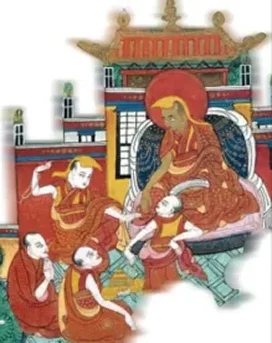
This tradition of questioning and exploring major Buddhist ideas traces back to the time of the Buddha himself and is central to the Tsongkhapa method of study (we see here an image of Je Rinpoché as a young monk studying debates). Primarily, it equips geshes with the tools to critically evaluate new ideas and determine which are correct and which are ultimately futile — like faulty fire extinguishers sold in a discount store that fail when the need arises, say, at the moment of death.
Secondly, these rigorous and critical debates make geshes precise and fearless when answering questions posed by their own students, as they eventually become teachers themselves. Finally, the annual interaction among the top geshe candidates from each major monastery strengthens the monasteries of Tsongkhapa — as these geshes will later become abbots and debate with masters in their own monasteries in a few decades.
Monks in these monasteries begin their first training in reasoning and debate around the age of 15, energetically discussing one of the traditional short teachings of Master Dharmakirti’s major ideas. For this course, we have selected one of the most significant texts, written by Purbuchok Jampa Gyatso (1825-1901), an important figure in our direct lineage, passed on to us by Khen Rinpoche.
This work is titled “Explanation of the Path of Reasoning” and belongs to the genre known as selected topics of clear thinking. Included in these texts and this course are not only sophisticated explanations of ancient forms of Buddhist logic but also essays — in the debate format — on key subjects such as the definition and division of existence; cause and effect; negative and positive, and the most important qualities and characteristics.
Mastering each of these topics is crucial for the ultimate task of perceiving emptiness directly; and thus, studying the third major topic, clear thinking, is traditionally called “the key to emptiness”. We see, for example, how this course is a cornerstone for DCI Level 7, “Touching the Diamond World.”
Basic Course ACI 14: “Lojong: Cultivating a Good Heart”
The next foundational ACI course focuses on the ancient tradition known as Lojong, which literally means “mind training”—methods aimed at cultivating bodhichitta, or the “good heart,” as it is called here.
This course shifts focus dramatically from the highly technical material on Buddhist logic and perception to the most sublime examples of Lojong poetry. Participants may be surprised to learn that one reason for introducing the study of the good heart at this point in the foundational courses was to inspire early-stage students who might have found the preceding material overly demanding.
The journey covers seven of the most renowned Lojong texts, starting with the famous “Eight Verses for Training the Mind” by Kadampa master Geshe Langri Tangpa (1054–1123). This practical teaching on compassion and emptiness remains a cornerstone of brief teachings often delivered by visiting lamas when time is limited to one or two lectures.
Another key text in this tradition is the celebrated “Seven-Point Mind Training”, a body of oral instructions finalized by Kadampa Geshe Chekawa Yeshe Dorje (1101–1175).
The final major work of this tradition included in the course is “The Wheel of Sharp Weapons”, a classic work attributed to the Indian master Dharmarakshita, presented to his disciple, Lord Atisha (982–1052), during his historic journey across the Himalayas to bring Buddhist teachings to Tibet. This text is renowned for its insights into karmic correlations (“do this, experience that”) and served as a foundation for modern interpretations of karma, such as those presented by Geshe Michael in The Diamond Cutter, which discusses success in business.
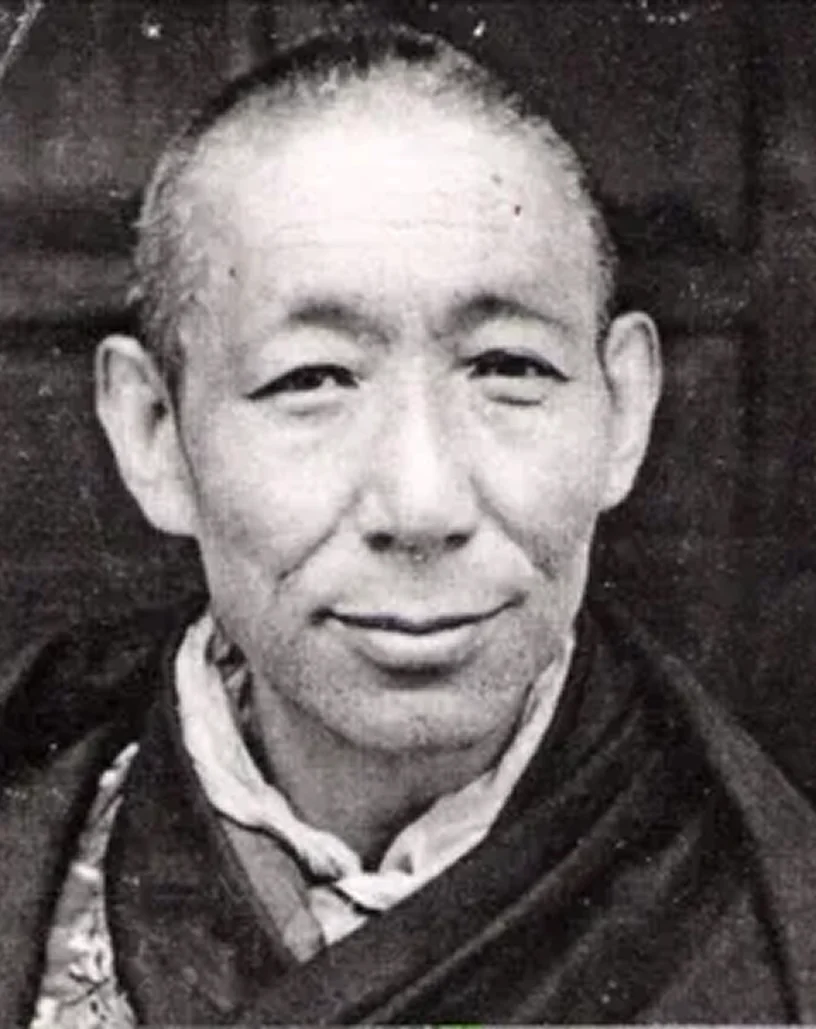
The only reason we still have the original Lojong materials from ancient Tibet is the dedicated work of Trijang Rinpoche, Lobsang Yeshe Tenzin Gyatso (1901–1981), who not only served as the root lama of Khen Rinpoche and custodian of these ancient texts but also exemplified the true spirit of the “good heart.”
Foundational Course ACI 15: “What Buddha Really Meant”
An incredible fact about the historical Buddha’s life is that during the approximately 50 years he spent teaching in this world, he presented three major cycles of teachings. These cycles, intriguingly, seem to contradict one another!
Simply put, the Buddha spent the years immediately following his enlightenment introducing his disciples to what is essentially a list of fundamental principles – such as the Four Noble Truths, the Twelve Links of Dependent Origination, and the Ten Virtues.
Then, suddenly, during the second great period of his teachings, the Buddha began focusing on emptiness, emphasizing that nothing in the world has an intrinsic nature. For example, “fire,” he taught, “is not inherently hot on its own.”
As one might expect, these teachings – embodied in the famous Heart Sutra and the Diamond Sutra – provoked a strong reaction among his students. In a renowned dialogue between the Buddha and ten of his disciples (all prominent bodhisattvas), they challenged him on the apparent contradictions and asked for an explanation.
The question-and-answer sessions that followed marked the beginning of the third and final great teaching cycle, now known as the “Clarification Teachings.” The discussions with the ten disciples were recorded in the most famous sutra of this period, aptly titled What I Really Meant.
The interpretation of these teachings became a subject of heated debate in subsequent centuries and eventually gave rise to the influential Mind-Only School, which, as noted earlier, is a key focus of Geshe studies, primarily within the fifth major topic, the next school—the Middle Way.
The most renowned commentary on this sutra is “The Essence of Eloquence” by Tsongkhapa himself, and this work forms the foundation of ACI 15 course. Although relatively brief, this presentation is considered so significant in monastic education that students pursuing a Geshe degree who memorize the entire commentary by heart are awarded special recognition before the entire assembly of monks.
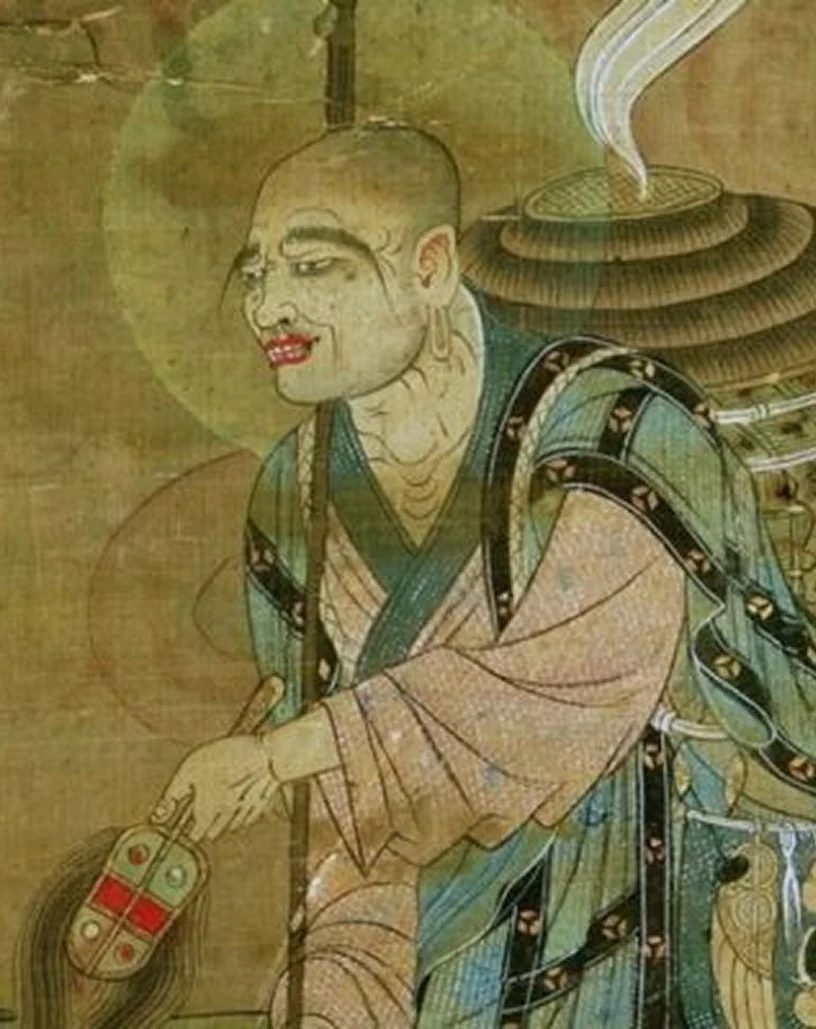
Tsongkhapa’s text also includes significant references to earlier Chinese works from the Tang Dynasty, such as those by the well-known Chinese monk Xuanzang (602–664 CE, depicted here with his famous backpack) and his disciples. Xuanzang spent 17 years studying intensively during his travels in India at the height of Buddhism’s development and, upon returning to China, translated many great classical works, including What I Really Meant.
His disciple, Master Yuan Ce (613–696 CE), wrote one of the longest treatises based on this sutra, which became a part of the canon of ancient Tibetan literature. The study of this work is now one of the central pillars of the DCI program for modern Asian business leaders under the title “China’s Soft Power.”
From a practical perspective, this final foundational course in the ACI series (courses 16–18 serve as reviews) acts as a springboard for ACI students to share the wisdom they have uncovered with others. It introduces the key concept of tailoring one’s message to the audience – a rationale given by the Buddha himself for delivering his teachings in various ways throughout his life.
This is perhaps “the greatest teaching advice” for those completing the foundational courses and preparing to share their knowledge with people worldwide, helping them discover this profound spiritual path.
Foundational Course ACI 16
The final three foundational courses (16–18) serve as an overview of the fifteen courses described above. This review is designed to solidify students’ understanding of this concise version of the traditional Geshe course and to provide them with a strong foundation for studying the advanced cycle of 18 Diamond Path courses in the future.
Foundational Course 16 offers a review of the first five foundational courses:
- “The Principal Teachings of Buddhism”
- “Buddhist Refuge”
- “Practical Meditation”
- “Proof of Future Lives”
- “How Karma Works”
Foundational Course ACI 17
Foundational Course 17 provides a review of the middle five core courses:
- “The Diamond Cutter Sutra”
- “The Bodhisattva Vows”
- “Death and the Realms of Existence”
- “Ethical Living”
• “The Guide to the Bodhisattva’s Way of Life,” Part 1
Foundational Course ACI 18
Foundational Course 18 reviews the final five foundational courses:
The 18 Diamond Path Courses
An overview of the advanced ACI courses—the 18 Diamond Path Courses—will be presented during the second level of teacher training.